
Criminal Cases in Denver County Courts
Denver has a court split found nowhere else in Colorado. Denver County Court is city funded and handles municipal cases, state misdemeanors, petty offenses, traffic matters, and early felony events. Felony cases that continue on the merits move to Denver District Court, the Second Judicial District. Both operate criminal functions at the Lindsey-Flanigan Courthouse, but their files, portals, and copy routes remain distinct.
County Court Criminal and Municipal Divisions use Room 160 at 520 W. Colfax Avenue. The counter is open Monday through Friday, 8 a.m. to 4 p.m.; call 720-337-0410 or email criminal@denvercountycourt.org. Denver District Court accepts records requests through DenverDCRecordsRequest@judicial.state.co.us and maintains paper-record operations at 1437 Bannock Street, Room 256. A CR number may describe a felony track, while M and JD appear in other court or juvenile matters. GV, GS, and D are used in City Attorney municipal or traffic work.
Denver Criminal Cases Use Two Systems
The state Colorado Judicial Branch Docket Search helps locate scheduled District Court proceedings. It is a calendar tool, not a full document library. Denver County Court runs its own Quick Search, and a statewide result does not replace that local system. This separation reflects Denver County Court's 1965 start as a court that applies both city ordinances and state law.
The official County Court Quick Search is shown below. Its narrow entry gate is useful when an arrest booking or case number is already known.
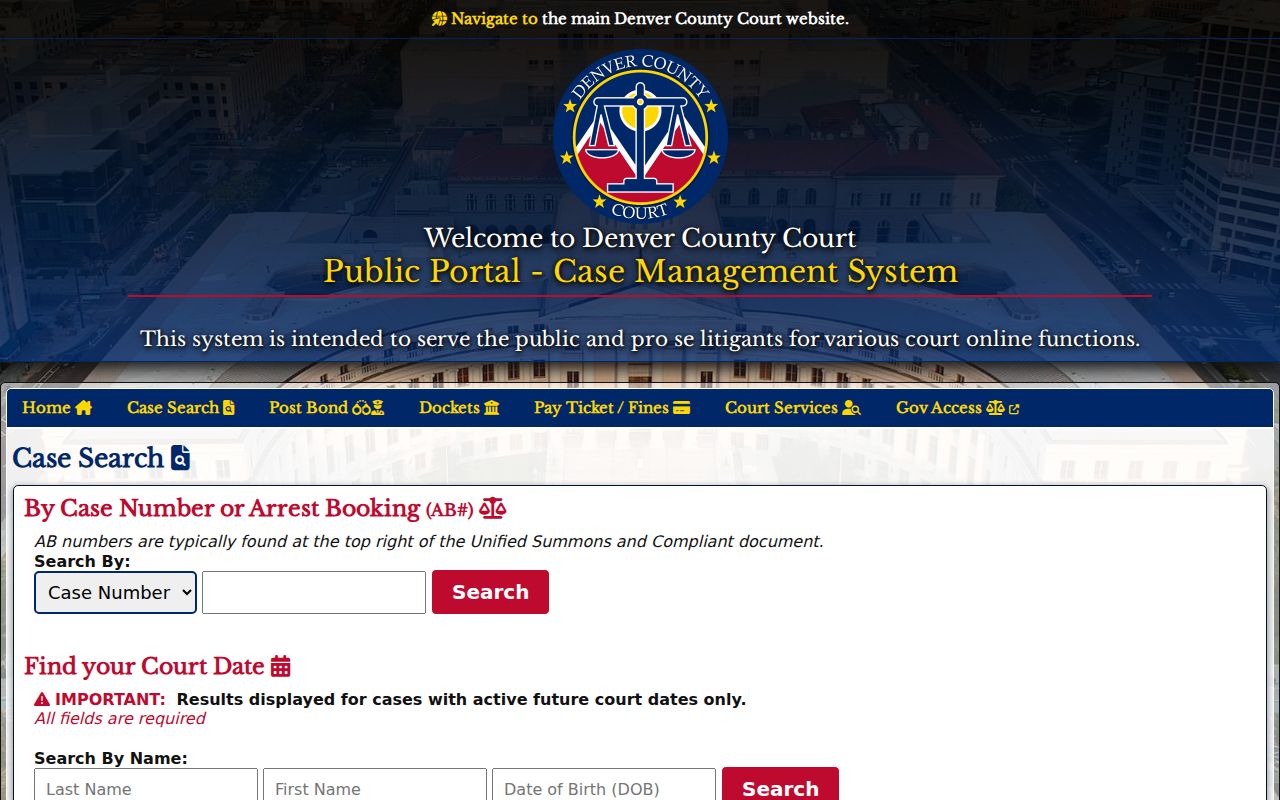
The interface confirms why a name alone cannot open a historical County Court file. Preserve an AB number from a Denver Sheriff booking whenever possible.
How to Search Case Records
Begin with the event number already in hand. County Court Quick Search supports a case number or arrest booking number. Its separate “Find your Court Date” feature uses a name and birth date, but it returns active future appearances rather than a full history. For a felony, use the state docket to confirm dates, then request the merits file from District Court.
- Identify County Court or District Court from the case prefix, charge level, or booking record.
- Enter the known case number or AB number in County Court Quick Search; use the state docket for District Court hearing dates.
- Compare court, party, filing, and charge details so a similar number is not mistaken for the target case.
- Read the register of actions in date order and note the final disposition and sentence entry.
- Ask Room 160 or District Court records for copies; specify certification when an official document is required.
| Field | Type | Required | Denver use |
|---|---|---|---|
| Search By | Dropdown | Yes | Select case number or Arrest Booking number |
| Search value | Text | Yes | Enter the complete known identifier |
| Last and first name | Text | Yes for court-date tool | Finds active future dates, not full history |
| Date of birth | Date | Yes for court-date tool | Helps narrow active appearances |
Missing Denver Criminal Case Records
A blank public result can mean the wrong Denver system was searched. It can also reflect sealing, a juvenile restriction, an old paper file, or an identifier error. Colorado offers a sealed-case confirmation search for the person whose record may have been sealed. Broader research access follows a different official request process.
The official confirmation interface illustrates that sealed status is not tested through the ordinary public docket.
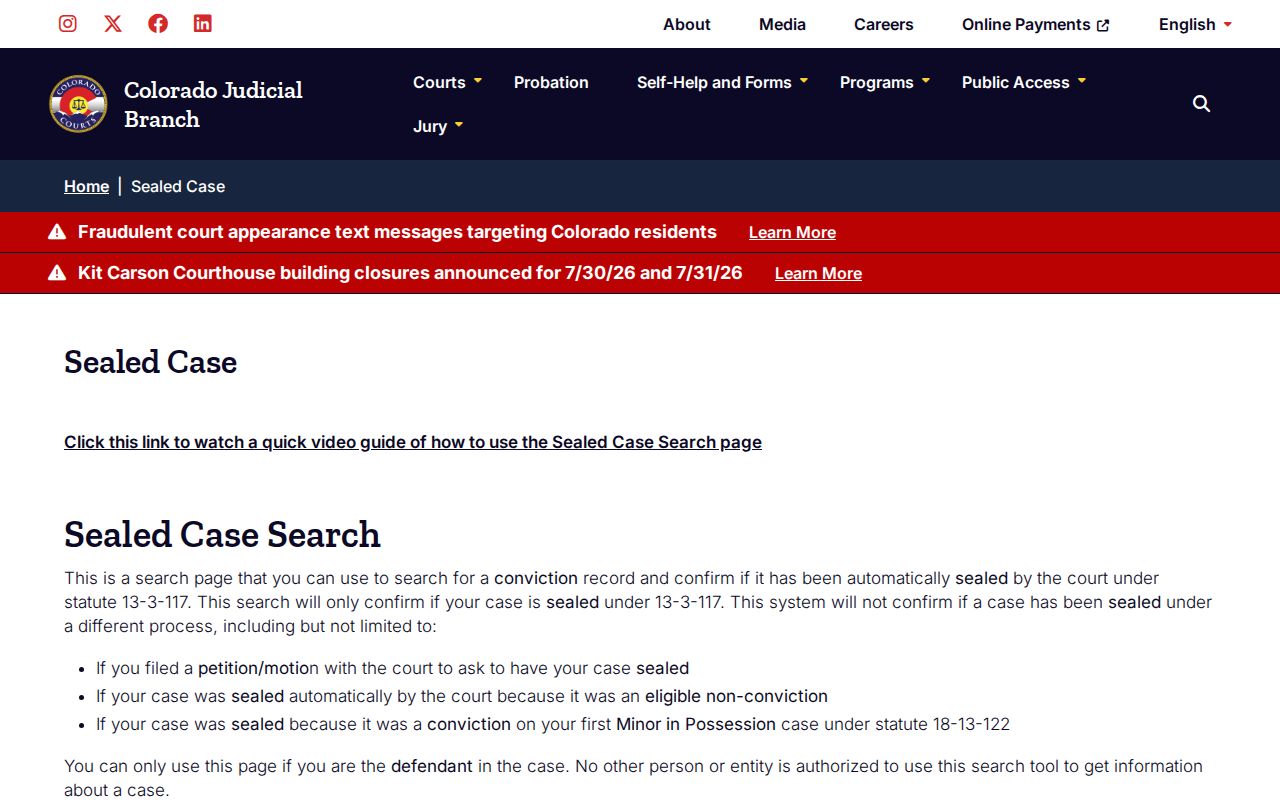
Parties, attorneys, and authorized agencies may retain access that the public does not have. Contact the clerk instead of assuming that no visible result means no Denver criminal case ever existed.
What the Case File Shows
The court file begins after a prosecutor files a charge. It may preserve an initial complaint, later amendments, hearing minutes, motions, orders, pleas, trial events, judgment, and sentence. The register of actions is the dated index. It can point to the decisive item, but a short docket label may not state all terms found in the document itself.
| Case number and court | Identifies the custodian, year, division, and file track. |
|---|---|
| Charging document | States charges actually filed, which may differ from booking allegations. |
| Docket entries | Lists filings, hearings, orders, continuances, and status changes by date. |
| Hearing dates | Shows scheduled and completed events; future-date tools are not full histories. |
| Disposition and judgment | Records dismissal, plea, verdict, acquittal, or other final result. |
| Sentence and conditions | States penalties and court-ordered terms that are public in the case file. |
County Court lists ordinary copies at $0.25 per page, certification at an added $20 per document, and electronic copies as generally free. A certified disposition must come from the court or prosecutor, not from CBI's repository report.
Compare Denver County Criminal Dispositions
A court disposition is the clerk's record of how a filed Denver criminal case ended. A CBI disposition entry is a state repository field built from information reported back by courts. Reporting can lag or remain incomplete, so the two sources may not tell the same story at the same time. If ICHC says that a disposition is unknown, obtain the certified outcome from the court that decided the case.
CBI accepts supporting court or agency documents through its disposition-update and record-challenge process. In rare cases where no outcome survives after a broad official search, CBI may use a “Disposition Record Purged” notation when qualifying letters support it. That notation improves an incomplete repository cycle, but it does not replace the original Denver County court file when the file still exists.
Federal Criminal Cases in Denver County
Federal charges belong to the U.S. District Court for the District of Colorado, not either Denver local court. The District of Colorado court site provides clerk and courthouse information, including the Alfred A. Arraj U.S. Courthouse at 901 19th Street.
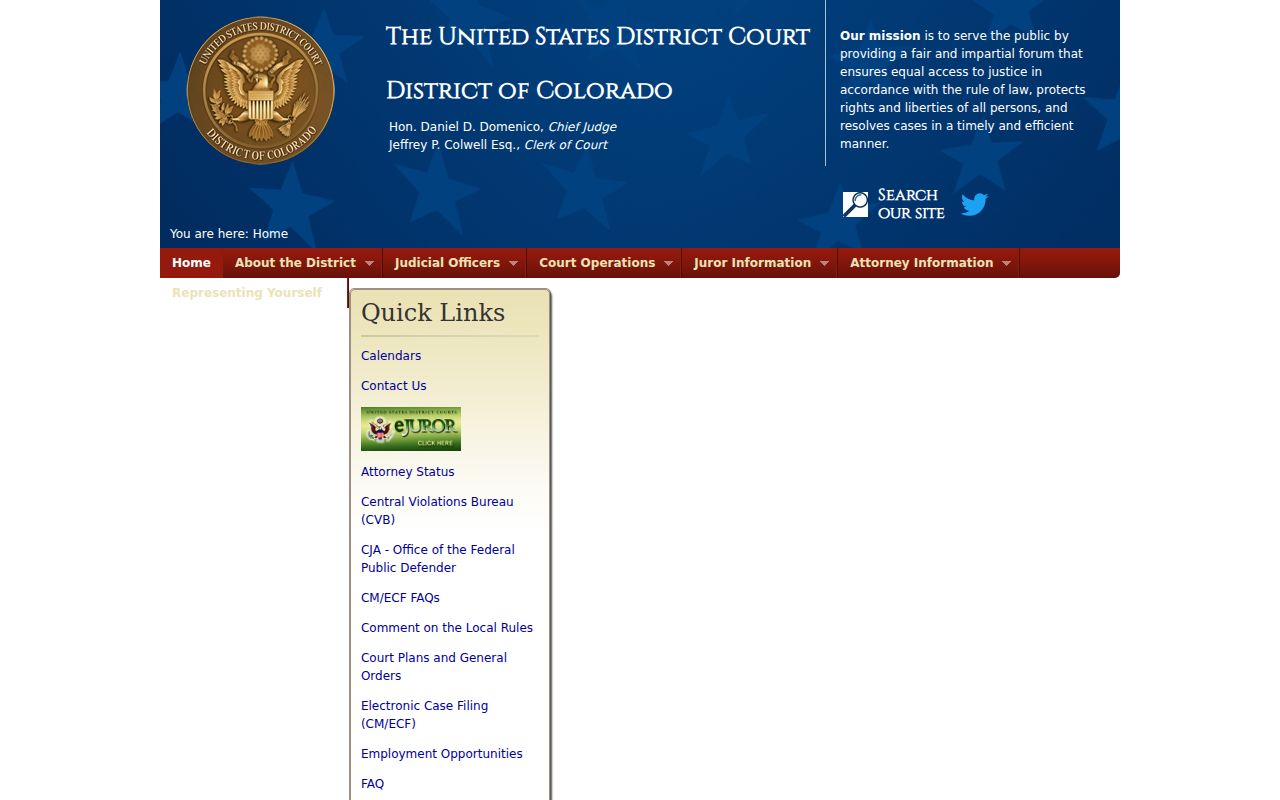
This separate court layer explains why a Denver County or state search cannot locate every prosecution arising inside the county.
Electronic federal dockets and documents run through PACER. Registration is required, per-page charges apply, and quarterly fees are waived when the total is $30 or less.
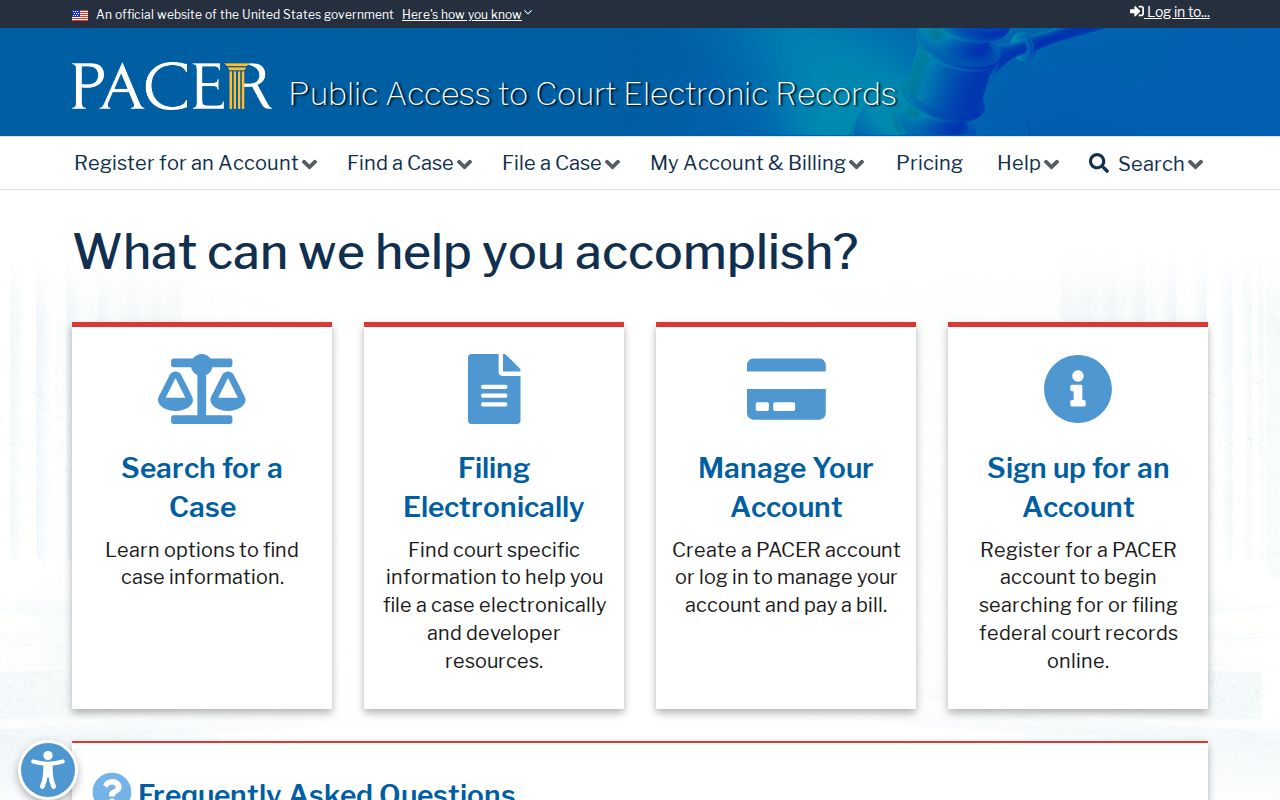
PACER should be used only for federal files. Denver Sheriff custody and Colorado court outcomes remain in their own systems.
Stages of a Criminal Case
A Denver matter may start with an arrest or summons, followed by advisement and a bond decision. The prosecutor then decides what to file. A felony may have an early County Court event before transfer to District Court. Misdemeanor and municipal matters can remain in County Court through their final result.
Case flow: Charges Filed › Arraignment › Pretrial › Plea or Trial › Disposition › Sentencing
Adult Diversion, Restorative Denver, behavioral-health programs, REACH, Veterans Treatment Court, and Handgun Intervention can alter that path for eligible cases. Successful completion may lead to dismissal in a qualifying program. Program participation should be confirmed through the actual court and prosecutor file.
Denver County Criminal Sentences and Probation
The docket is the public starting point for a probation sentence. Detailed supervision notes have no general name-search portal. Denver also has two adult probation offices in the Minoru Yasui Building: state Judicial Branch Adult Probation on the fifth floor and Denver County Court Probation on the eighth. They supervise different court populations.
The Colorado Judicial probation resource explains the state structure and public-status limits.
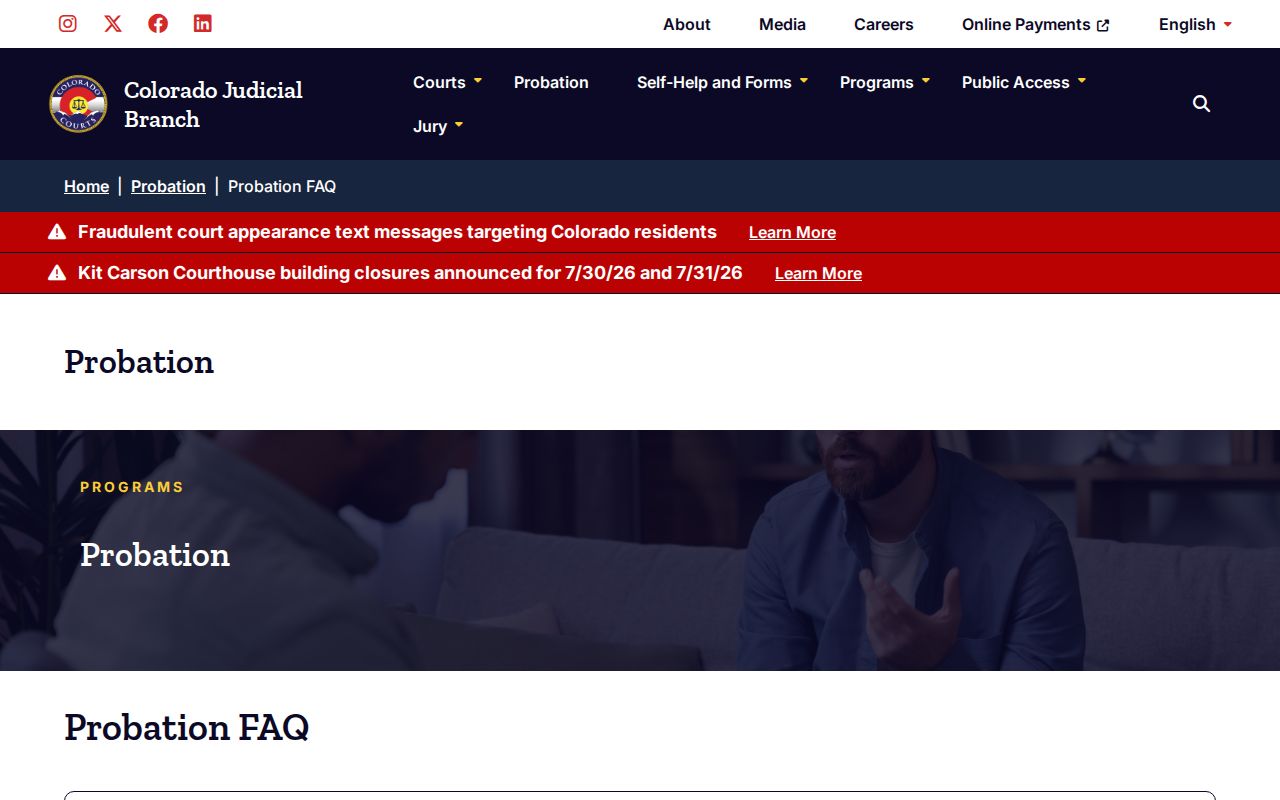
A revocation motion or hearing may appear on a public docket even when officer notes and treatment details remain restricted.
Access and Restrictions
Colorado court records are often open, but access is not absolute. Sealed cases, juvenile material, victim information, protected personal identifiers, and some sensitive exhibits may be hidden or redacted. An online view may also contain less than the clerk's maintained file. A request should name the case, desired document, date range, and whether a certified copy is needed.
County Court accepts written CORA or CCJRA data requests at coradatarequests@denvercountycourt.org. District Court uses its own record request channel. Those routes are not interchangeable with a request to Denver Police, Denver Sheriff, or CBI because each custodian owns a different record.
Older, paper, or ambiguous Denver County criminal case records may require staff help at the relevant clerk's counter. Give the clerk the full case number, court division, filing year, and the exact document sought. If the number came from a jail profile, say that it is an arrest booking identifier so staff can trace it to the court number. Telephone and in-person access remain important when a portal cannot display an archived file or when a brief docket code does not make the outcome clear.
Note: A repository disposition and a certified Denver court disposition are not the same product.